A fever that won’t break usually ends in a lab slip reading Widal or Typhidot. Of the two, Typhidot is generally the more dependable, mainly because it turns positive earlier in the illness. That timing is the whole story behind the Widal test vs Typhidot question, since an early test can come back clear in someone already infected.
According to the team at Dr Vaidya’s Lab, a pathology lab in Thane, “Patients usually arrive with a Widal result from another clinic and a lot of worry. A negative Widal in the first week doesn’t rule typhoid out, and a positive one doesn’t always confirm it. That’s why we look at the whole picture, and sometimes ask for a blood culture as well.”
How Does Each Test Actually Work?
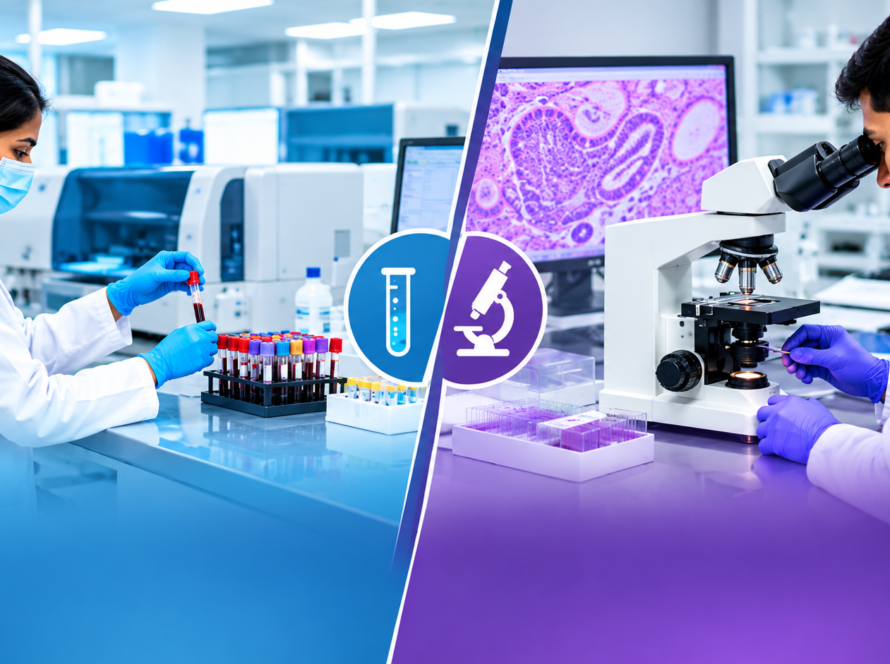
Widal dates back to 1896 and works by watching a patient’s serum make typhoid bacteria clump together. Typhidot is a newer dot ELISA kit that picks up IgM and IgG antibodies against the bacterium.
Widal Method: It reads O and H antibody titres, which is why reports show ratios like 1:160.
Typhidot Method: A positive IgM points to a current infection, and IgG on its own suggests a past one.
Timing: Widal usually needs 7 to 10 days of fever, while kit makers say Typhidot can show antibodies within two or three.
Sample: Both need only a routine blood draw, with no fasting required.
Our Monsoon Fever Advance Package includes Widal and Typhidot IgM along with a complete blood count, ESR, dengue and malaria tests. So one visit covers more than a single antibody result.
Which Typhoid Test Is More Reliable?
Typhidot usually comes out ahead on early detection, though neither antibody test has the final word. Funny how the quick tests get all the attention when blood culture is the actual gold standard.
Early Detection: A study in western Uttar Pradesh found Typhidot positive in about 49% of suspected cases against 39% for Widal, and the authors reported higher sensitivity for Typhidot.
Widal’s Weak Spot: Past infection, vaccination and other fevers can all raise antibody titres, so a single Widal value is often hard to interpret.
Typhidot’s Weak Spot: It can still throw up false positives, which is why a positive result needs a doctor’s judgment.
Blood Culture: It grows the bacteria from a blood sample, so it’s the benchmark, though it works best in the first week and the results can take a few days.
When your report arrives, our guide on how to read your pathology report walks through titres and the H and L flags. A titre of 1:160 means little without the day of fever.
Running a fever and unsure which typhoid test to ask for?
When Does a Fever Call for a Typhoid Test?
Most fevers are viral and clear on their own within a few days. But a fever that keeps rising or won’t settle is a different matter.
Stepwise Fever: A fever that steps up a little each day, instead of fading, is the classic pattern.
Stomach Symptoms: Belly pain, constipation or loose stools on top of the fever make doctors think of typhoid.
Monsoon Months: Cases climb after heavy rain, when sewage seeps into drinking water supplies.
Right Timing: A test taken in the first few days can miss an infection that a repeat or culture would catch.
Typhoid is treated with antibiotics chosen by a doctor, and the choice depends on the diagnosis. Don’t take the leftover tablets from the last fever while you wait for the report.
Key Takeaways: Typhidot usually shows an infection earlier than Widal, which is why doctors lean on it more, but neither test can confirm typhoid on its own. Widal needs about a week of fever to become useful, and blood culture remains the benchmark. Your doctor should pick the test based on how many days you had a fever, and a repeat test or culture is common when the first result doesn’t fit.
Frequently Asked Questions (FAQ)
It could. Antibodies take about a week to appear, so a test in the first few days often misses them. Doctors usually repeat it later or recommend a blood culture.
Not by itself. A positive IgM is a strong clue, yet doctors still read it alongside your symptoms and other results.
No. Neither test needs fasting, so breakfast is fine.
Antibody results are generally ready the same day or by the next morning. A blood culture takes longer because the bacteria need a few days to grow.
Disclaimer: The blog is for educational purposes only. Please consult a qualified doctor before choosing or interpreting a diagnostic test.
Your Health is Our Priority
Book your health checkup today and take the first step toward a healthier, brighter tomorrow!