Clinical Chemistry Tests in Thane
From checking blood sugar to investigating liver and kidney function, biochemical measurements help doctors understand what is happening inside the body. Clinical chemistry testing focuses on substances such as glucose, cholesterol, proteins, enzymes, and electrolytes that reflect different aspects of metabolic and organ health.
Founded in 1979 by Dr. Ulhas Mohan Vaidya, Dr. Vaidya’s Laboratory has built its diagnostic services around professional expertise, modern laboratory systems, and quality-focused testing practices. The laboratory caters to patients, doctors, hospitals, and healthcare organisations with a broad range of routine and specialised investigations.
At Dr. Vaidya’s Lab, Clinical Chemistry Tests in Thane include investigations that help assess metabolic health, monitor organ function, and identify biochemical imbalances. The choice of tests depends on individual symptoms, medical history, and the healthcare professional’s recommendations, helping ensure that investigations serve a clear clinical purpose.
Which biochemical tests help assess your health? Let’s look at the common clinical chemistry investigations.
Types of Clinical Chemistry Tests
Clinical chemistry investigations measure specific substances within the body to evaluate the function of particular organs, metabolism as well as the overall health of an individual.
Not every patient requires all these investigations. A doctor may recommend individual tests or a combination of tests based on the symptoms, medical history, and purpose of the investigation.

Understand which tests may be relevant to your health needs.
Reach out to a healthcare professional for suitable testing guidance.
What Can Clinical Chemistry Tests Help Detect?
* Blood sugar abnormalities:
Glucose analysis helps in detecting abnormal blood sugar levels in the patient’s blood as well as evaluating treatment efficiency.
* Liver conditions:
Changes in the values of liver enzymes and bilirubin can be used to evaluate further presence of liver problems.
* Kidney dysfunction:
Changes in creatinine and urea may indicate reduced kidney function and the need for additional assessment.
* Cholesterol-related concerns:
Values from the lipid profile can help assess cardiovascular risk and guide preventive care.
* Electrolyte imbalances:
Changes in the values of the electrolytes (sodium or potassium) may be caused by problems with fluid balance, muscle function and other essential processes.
* Nutritional concerns:
Proteins and other tests can provide valuable information about the nutritional status of the person and certain underlying diseases.
Changes in some values do not necessarily mean disease. Some other factors like medication intake, meals, hydration and existing health conditions can influence test results.
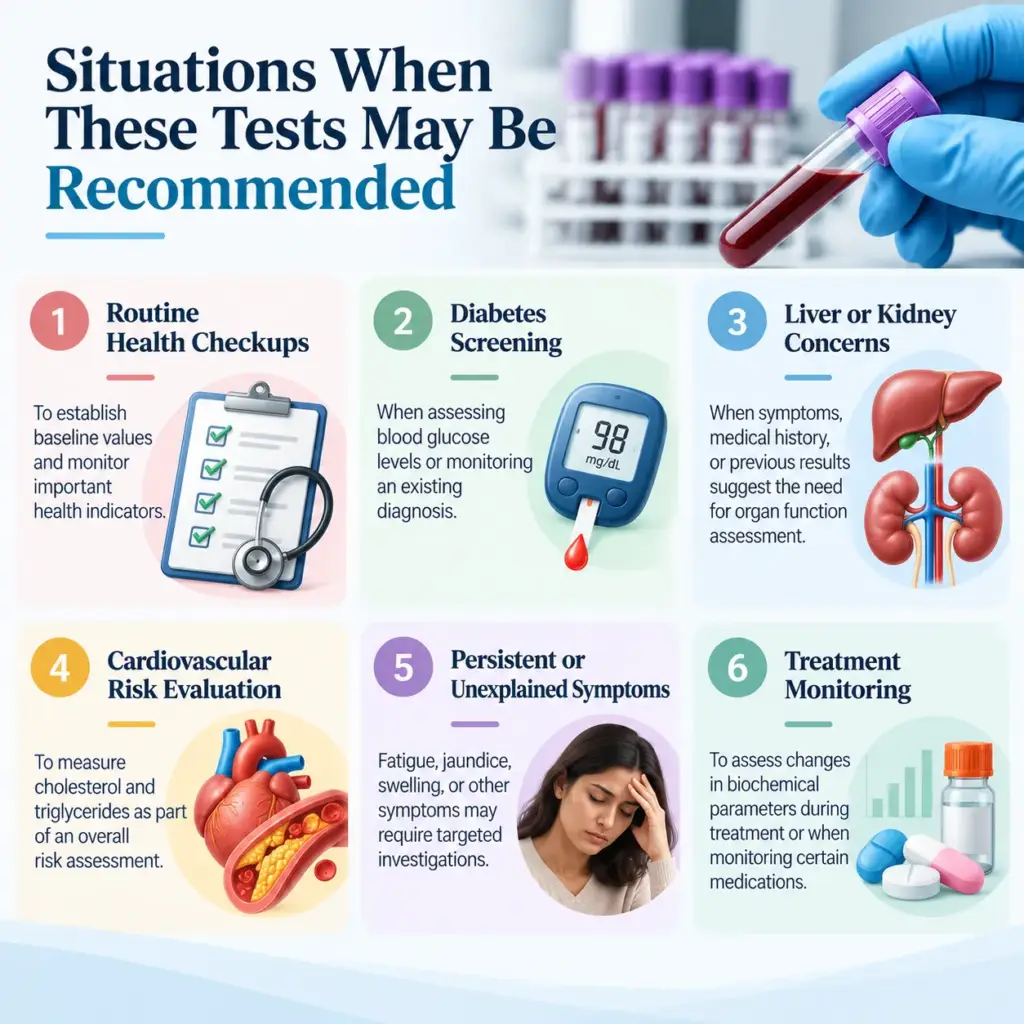
When May Clinical Chemistry Tests Be Recommended?
Doctors may recommend clinical biochemistry investigations as part of routine screening or when symptoms suggest a possible health concern.
Testing may be considered in the following situations:
The choice and frequency of testing should be guided by clinical needs rather than a fixed schedule for everyone.
How to Prepare for Clinical Chemistry Tests
There are different steps that vary depending on the type of investigation conducted. Adherence to all guidelines increases chances of getting reliable test results.
Confirm Fasting Requirements
Certain tests including fasting glucose measurements, require fasting. Some may not need it. Ensure that you know what needs to be done before sampling.
Discuss Your Medications with Your Health Practitioners
Ensure that all medications used, vitamins and even treatments are known. You should continue using your medication unless instructed by your doctor to stop.
Stay Hydrated
Unless instructed otherwise, drinking water is generally acceptable before routine blood collection and may make sample collection easier.
Follow Collection Instructions
Some investigations require a particular collection time or additional preparation. Follow the laboratory’s instructions for the tests being performed.
Carry Previous Reports
Previous results can aid in tracking health status changes.
What do your clinical chemistry results mean? Let’s understand how biochemical values are evaluated.
How Are Clinical Chemistry Test Results Interpreted?
Clinical chemistry reports typically include measured value and reference intervals provided by the laboratory. Reference intervals may depend on the testing method used and other relevant factors.
Interpretation of the results is made taking into consideration the measured value, symptoms, medical history, medications and other investigations. For instance, increase in liver enzymes may need further analysis, and changes in creatinine levels may require evaluation of function of kidney.
If the measured value falls outside the reference interval, this does not mean that there is an ailment. A result within the reference interval does not rule out all diseases. Sometimes it is recommended to conduct the investigations again.
For more details read the MedlinePlus guide to comprehensive metabolic panel testing to understand how biochemical measures can help determine glucose level, function of liver and kidney, protein levels, and electrolytes balance.

Get clarity on your laboratory results and reference ranges.
Connect with a qualified doctor for appropriate interpretation.
Frequently Asked Questions
Disclaimer: The information shared in this content is for educational purposes and not for promotional use.