Feeling tired all the time? Gaining weight without changing what you eat? Or losing weight, feeling jittery, and waking up at 3 a.m. with your heart racing? Many people blame stress, work or “just getting older.” But sometimes the real culprit is a small, butterfly-shaped gland in your neck: the thyroid.
A simple thyroid test can give you clear answers. Here’s what the numbers mean and what to do with them.
What Is a Thyroid Function Test?
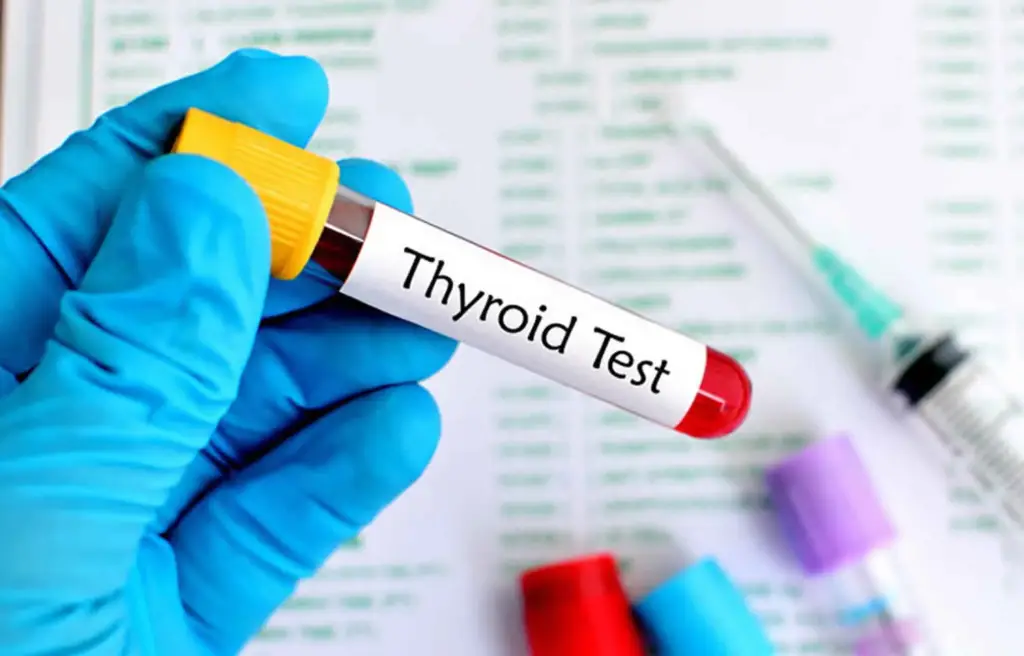
A thyroid function test is a blood test that checks how well your thyroid gland is working. The thyroid makes hormones that control your metabolism: how fast your body burns energy, how quickly your heart beats, how warm you feel, even how your mood behaves.
When the gland makes too little or too much hormone, the whole body feels it. That’s why doctors often suggest a thyroid profile when symptoms are vague and hard to pin down, such as fatigue, hair fall, mood swings, irregular periods or unexplained weight changes.
Considering a Thyroid Test? If you’re experiencing unexplained fatigue or weight changes, a thyroid profile can help assess your thyroid function.
Understanding TSH, T3 and T4 Tests
A thyroid profile usually measures three things:
- TSH (Thyroid Stimulating Hormone): This one doesn’t come from the thyroid. It comes from the pituitary gland in your brain, and it acts like a manager telling the thyroid to work harder or slow down. If your thyroid is underactive, TSH rises as the brain “shouts” for more hormones. That’s why TSH is usually the first test doctors look at.
- T4 (Thyroxine): The main hormone the thyroid produces. It’s mostly an inactive “storage” form that the body converts when needed.
- T3 (Triiodothyronine): The active hormone that actually does the work in your cells. It’s more powerful than T4 but present in smaller amounts.
You may also see terms like Free T3 and Free T4. These measure the hormone that’s unbound and available for your body to use, and many doctors find them more accurate.
TSH, T3 and T4 Normal Range Explained
Here are the typical adult reference ranges. Keep in mind that these vary slightly from lab to lab, so always compare your result with the range printed on your own report.
Test | Typical Normal Range |
TSH | 0.4 – 4.0 mIU/L |
Free T4 | 0.8 – 1.8 ng/dL |
Total T4 | 5.0 – 12.0 µg/dL |
Free T3 | 2.3 – 4.2 pg/mL |
Total T3 | 80 – 200 ng/dL |
A few things can shift these numbers:
- Pregnancy: TSH targets are usually lower, especially in the first trimester.
- Age: Older adults may have slightly higher TSH levels.
- Medicines and supplements: Biotin (common in hair and nail supplements) can interfere with results. Tell your doctor if you take it.
One more thing: a number slightly outside the range isn’t automatically a disease. Your doctor reads the report alongside your symptoms.
What Do High or Low TSH Levels Mean?
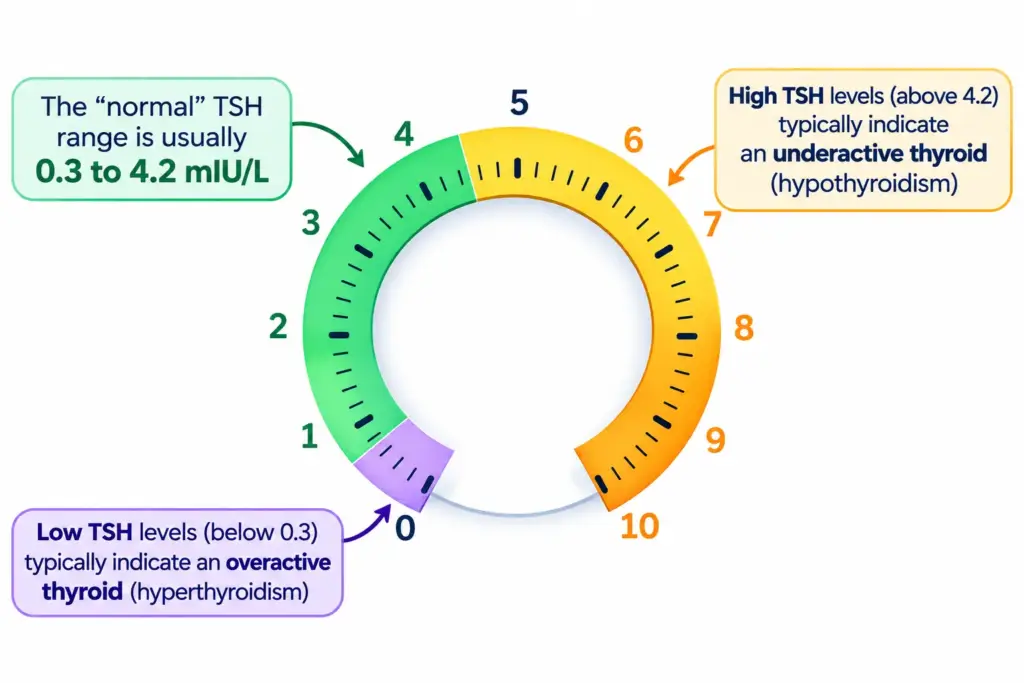
Because TSH works in the opposite direction from thyroid hormones, it can feel a bit backwards at first.
- High TSH usually means your thyroid is underactive. The brain is pushing hard, but the thyroid isn’t responding enough. Along with low T4, this points to hypothyroidism.
- Low TSH usually means your thyroid is overactive. There’s already plenty of hormone in the blood, so the brain eases off. Along with high T3 or T4, this suggests hyperthyroidism.
There’s also subclinical thyroid disease, where TSH is off but T3 and T4 still look normal. Doctors often just monitor this with a repeat test in a few weeks or months.
Difference Between Hypothyroidism and Hyperthyroidism
Think of your metabolism as a car engine. In hypothyroidism it’s idling too slowly, and in hyperthyroidism it’s revving too high.
Hypothyroidism (underactive thyroid)
- Constant tiredness and sluggishness
- Weight gain
- Feeling cold when others don’t
- Dry skin and hair fall
- Constipation
- Low mood, brain fog
- Heavy or irregular periods
Hyperthyroidism (overactive thyroid)
- Unexplained weight loss despite a good appetite
- Fast or pounding heartbeat
- Anxiety, irritability, restlessness
- Excess sweating, heat intolerance
- Trembling hands
- Trouble sleeping
- Lighter or missed periods
Both conditions are very common in India, particularly in women, and both are treatable once diagnosed. The key word is diagnosed, which is why testing matters.
Looking to Understand Your Thyroid Health?
A thyroid profile helps assess TSH, T3 and T4 levels and provides insights into thyroid function.
How Is a Thyroid Function Test Performed?
It’s quick and simple, just a standard blood draw from your arm. The whole thing takes a few minutes.
Thyroid function tests are part of clinical chemistry testing and commonly use immunoassay techniques to measure hormone levels in the blood. These laboratory methods help measure TSH, T3 and T4 levels and provide results that doctors can interpret alongside a person’s symptoms and medical history.
- Fasting: Usually not required for TSH, T3 and T4, though some labs prefer a morning sample since TSH is naturally higher early in the day. Follow your lab’s instructions.
- Medication: If you take thyroxine, many doctors advise getting tested before your daily dose. Check with your doctor.
- Results: Typically available the same day or within 24 hours.
If you’re looking for a thyroid blood test in Thane, any reliable pathology lab in Thane with proper quality checks and a trained phlebotomy team can do it. Look for clear reference ranges on the report and prompt turnaround.
If you’ve been ignoring symptoms for a while, this is a good week to stop guessing. A basic thyroid profile can tell you a lot.
Frequently Asked Questions (FAQ)
No. Have your breakfast, have your chai, go as you are. Plenty of people still pick a morning slot because TSH tends to be a bit higher then, so it’s easier to compare with your next report. One thing to remember: if you take a thyroid tablet every day, get your blood drawn first and take the tablet after.
For most adults, it’s between 0.4 and 4.0 mIU/L. Some labs use a slightly different range, say 0.5 to 5, so don’t panic if your number looks “off” next to someone else’s. The range is printed right beside your result. That’s the one to go by.
They can. A recent fever, an infection, a rough couple of weeks, even certain medicines can move the numbers for a while. If your report looks strange but you feel fine, the doctor will often just say test again after 4 to 6 weeks. One odd result doesn’t mean much on its own.
If you’re on medication, about once or twice a year is normal. After a dose change, doctors usually recheck in 6 to 8 weeks. If you’ve never been tested, do it once if thyroid problems run in your family, or if you’ve been tired, losing hair or putting on weight for no reason you can explain.
Mostly they’re managed rather than cured. You take a tablet daily, get a check-up now and then, and life carries on normally. Some types do go away by themselves, like the thyroid inflammation some women get after delivery or people get after a viral infection. Your doctor can tell you which kind you have.
Disclaimer: The blog is for educational purposes only. Please consult a qualified doctor before choosing or interpreting a diagnostic test.
Your Health is Our Priority
Book your health checkup today and take the first step toward a healthier, brighter tomorrow!